

At 6.30 each evening, the daily service begins at Sri Dalada Maligawa, the Temple of the Sacred Tooth Relic in Kandy. The sound of the Hewisi drums marks the ceremony, as devotees bring flowers and make offerings at one of Sri Lanka’s most revered places of worship.
It is a place of worship first, and not a museum. Visit it as a guest at a ceremony rather than as a sightseer, and it gives far more back.
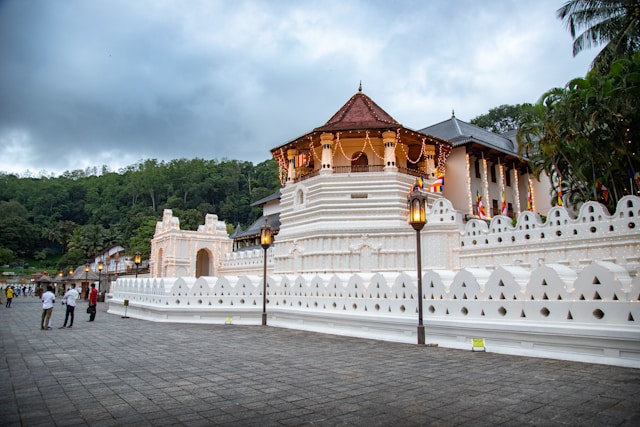
What the temple holds
According to Sri Lankan Buddhist tradition, the Sacred Tooth Relic was brought from Kalinga in India by Princess Hemamala and Prince Dantha during the reign of King Kithsiri Meghavanna, in the fourth century CE.
It became the symbol of kingship. Wherever the capital moved, the relic was kept in a shrine within the royal palace, and a king who did not hold it was not regarded as the true ruler. Kandy was the last royal capital of the island’s kings, which is why the relic is here.
A shrine rebuilt by kings
The first shrine in Kandy was built under King Wimaladharmasuriya I in the late sixteenth century, and it was destroyed and rebuilt more than once. The two storey inner shrine you see today dates from the reign of Sri Veera Parakrama Narendrasinghe in the early eighteenth century.
The octagonal pavilion beside it, the Paththirippuwa, was added by Sri Wickrama Rajasinghe, the last king of Kandy, who also created Kandy Lake from 1807. UNESCO listed the Sacred City of Kandy as a World Heritage Site in 1988.
Visiting the Temple of the Tooth, Kandy: go in the evening
The temple holds three services a day: early morning from 5.30, mid morning from 9.30, and evening from 6.30 to 8.00. Each is announced by Hewisi drums, which begin before dawn at 5.15 for the first, and during the ceremony the doors of the relic chamber are opened, the silver door first and then the golden.
The tooth relic itself is not displayed to visitors during the daily services. The richly decorated casket associated with the relic may be seen when the inner chamber is opened, while the ceremony offers an opportunity to observe the devotion, offerings and rituals that remain central to the temple.
The evening service is a particularly atmospheric time to visit, although each service has its own character. On Wednesdays, a separate ritual known as Nanumura Mangallaya is associated with the ceremonial bathing of the relic using a herbal preparation.
What to wear, and what to expect
Visitors should dress modestly, covering their shoulders and legs. Footwear must be removed before entering the sacred areas, and visitors should follow the temple’s instructions on where to leave shoes and belongings. Security procedures and access arrangements may change, so allow time at the entrance.

The temple’s official visitor information currently lists an admission fee of LKR 3,000 for visitors from most countries, including access to the Dalada Museum, World Buddhist Museum, Tusker Museum and Royal Elephant Stable. Fees may change; check the official information before visiting and purchase tickets only from the authorised ticket machines. Photography restrictions apply in designated areas and during services, so follow the signs and instructions of temple staff.
Arrive before the service to allow time for ticketing, security and finding a suitable place to observe. Check with the temple office in advance about accessibility arrangements and the availability of audio guides.
The rest of Kandy, briefly
Kandy Lake was made on former paddy fields between 1807 and 1812, and a slow walk around it is the natural way to arrive or leave, albeit a magical experience. Walk it afterwards, or before, if you come early. The Royal Botanic Gardens at Peradeniya, 147 acres laid out in 1821, are about five and a half kilometres west of the city and make a good morning. In July or August, the Esala Perahera carries the sacred casket through the streets in procession.
Back to the hills
Aarunya Nature Resort is set within a ten-acre spice and tea estate in the foothills of the Knuckles range, approximately 30 to 45 minutes north of Kandy by road, depending on traffic. Its location makes it possible to combine time in the city with a return to the quieter hill-country setting with the Aarogya Spa & Wellness Centre a great way to relax before or after a visit to town.
It is the right way round to see the temple: a day of forest walks and quiet, the drums at dusk, then the drive back up into the dark. Guests can also join a blessing ceremony at the village temple near the resort, a smaller and more personal way to see how faith is lived here.
Frequently asked questions
What time is the evening ceremony at the Temple of the Tooth?
The official temple information currently lists services from 5.30 to 7.00 in the morning, 9.30 to 11.00 mid-morning and 6.30 to 8.00 in the evening. Check the temple’s official information before visiting, as schedules may change.
What should I wear to the Temple of the Tooth?
Dress modestly, covering your shoulders and legs, and remove footwear before entering the sacred areas. Follow the instructions of temple staff about clothing, footwear and belongings.
How far is Aarunya Nature Resort from Kandy?
Aarunya Nature Resort is approximately 30 to 45 minutes north of Kandy by car, depending on traffic, in the foothills of the Knuckles range.


