

Many historic forts are preserved as monuments. Galle Fort, by contrast, remains a living part of the city. Residents and businesses occupy its streets, while its architecture reflects successive Portuguese, Dutch and British periods. Its historic urban fabric is part of what makes the fort so compelling to explore.
It is the best known sight on Sri Lanka’s south coast, and it rewards a slow day far more than a quick stop on the way somewhere else.
Portuguese, Dutch, British
The Portuguese built the first small fort here in 1588. The Dutch took it in 1640 and gave it the shape it has now, with most of the walls dating from 1663. The British arrived in 1796 and added their own layer, including the Main Gate.
The oldest part of the walls still standing is the Black Fort, the Zwart Bastion, a survivor of the Portuguese years, which the Dutch kept and later enlarged.
UNESCO inscribed the Old Town of Galle and its Fortifications as a World Heritage Site in 1988, describing it as the best example of a fortified city built by Europeans in South Asia.
Walk the ramparts first
The ramparts extend for approximately three kilometres around the old town and include a series of bastions. On the landward side, the best-known are the Sun, Moon and Star bastions, facing the modern city beyond the fort.
There is almost no shade on the ramparts, so the first walk belongs early in the morning, before the heat. Allow about an hour for the full circuit, and longer if you stop to watch the sea, which you will.
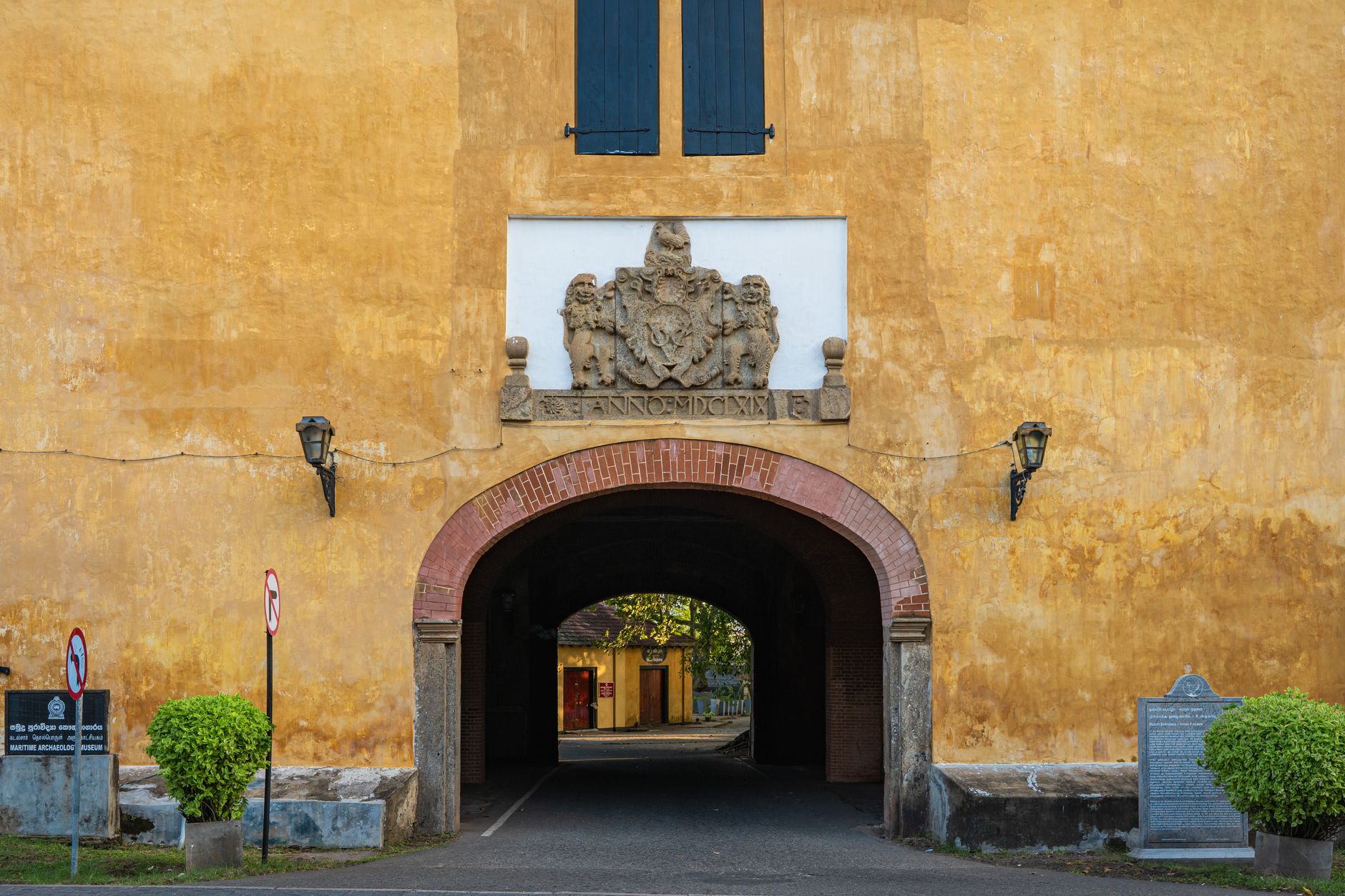
Start at the Old Gate. On its outer face is a British coat of arms, and on the inner side the letters VOC, for the Dutch East India Company, with the date 1669. From there the ramparts lead to the lighthouse on the Point Utrecht Bastion, a tower of 26.5 metres that replaced an earlier one lost to fire, and on to Flag Rock, where ships were once warned off the rocks below.
Inside Galle Fort
The streets inside are a short grid, easy to wander without a plan. The Dutch Reformed Church has a floor paved with gravestones moved from old Dutch cemeteries and a pulpit of calamander wood. All Saints’ Church, consecrated in 1871, holds the Anglican side of the story. The clock tower dates from 1883, and the Meeran Mosque faces the lighthouse.
The Old Dutch Hospital now holds shops and restaurants, and the Maritime Archaeology Museum sits by the Old Gate. Dress modestly for the places of worship. The mosque has no general admission, though visitors who are dressed appropriately are sometimes invited in.

Entry to the fort itself is free, and a few of the museums charge for entry.
The wave the walls held back
When the 2004 Indian Ocean tsunami struck Sri Lanka’s southern coast, Galle Fort was also affected. The ramparts and the historic town experienced damage, although the extent and pattern of impact varied across the site. UNESCO’s assessment afterwards found that, thanks to the walls, the old town suffered only relatively minor damage, although water came in through the northern gate, flooding the old maritime museum inside to more than two metres, and three short sections of wall were partly destroyed. They were repaired in the years that followed.
Planning the day from Aavya
Aavya Cove Villas is set on the coast at Balapitiya, 45 minutes north of Galle along the dramatic, coastal Galle Road, making Galle Fort a rewarding excursion during a stay. The drive time can vary with traffic, so guests should allow additional time when planning their visit. Aavya’s guided Galle experience can be arranged through the resort.
On your own, you can make a longer day of it.
Leave after breakfast, walk the walls before the sun is high, and spend the middle of the day in the shaded streets inside, where the verandas of the Old Dutch Hospital are a good place to sit out the heat over lunch. Come back up to Flag Rock for the evening, when the light turns and half the town seems to arrive for the same view. This close to the equator the sun sets between about ten to six and half past six all year, so the evening needs no planning beyond being there. Then drive home to the cove for dinner.
After a day exploring the fort’s layered history, returning to the coast at Aavya offers a quieter contrast: the open water, the changing light and the slower rhythm of the bay. Don’t forget the Aarogya Spa & Wellness Centre for a soothing, recovery treatment.
Frequently asked questions
How long do you need at Galle Fort?
Allow a full day to walk the ramparts early, explore the streets inside and stay for sunset at Flag Rock. The Galle excursion from Aavya Cove Villas runs four to six hours.
Is there an entry fee for Galle Fort?
Entry to the fort is free. A few of the museums inside charge for entry.
How far is Galle Fort from Aavya Cove Villas?
About 45 minutes by road along the coast from Balapitiya.Travel time varies with traffic and the route. Allow additional time for the drive from Balapitiya and confirm the current estimate with the team at Aavya Cove Villas before setting out.


